
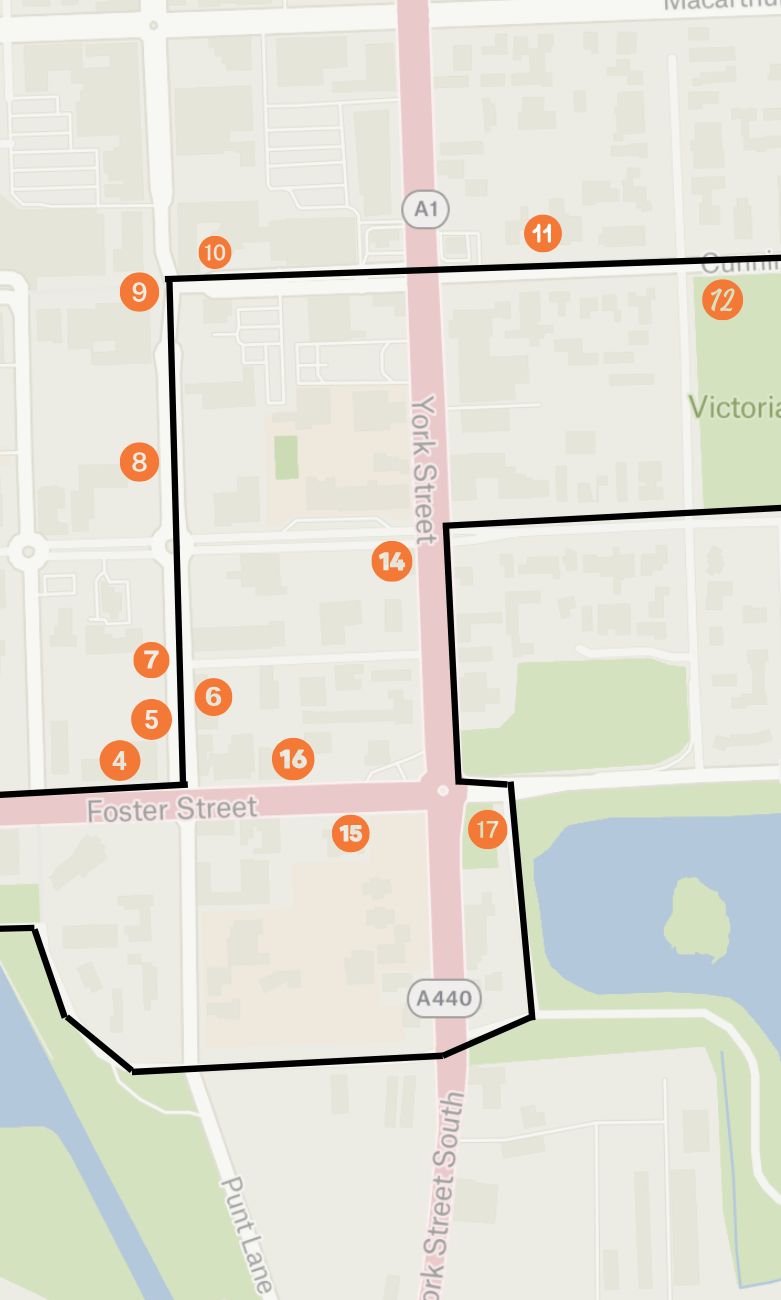
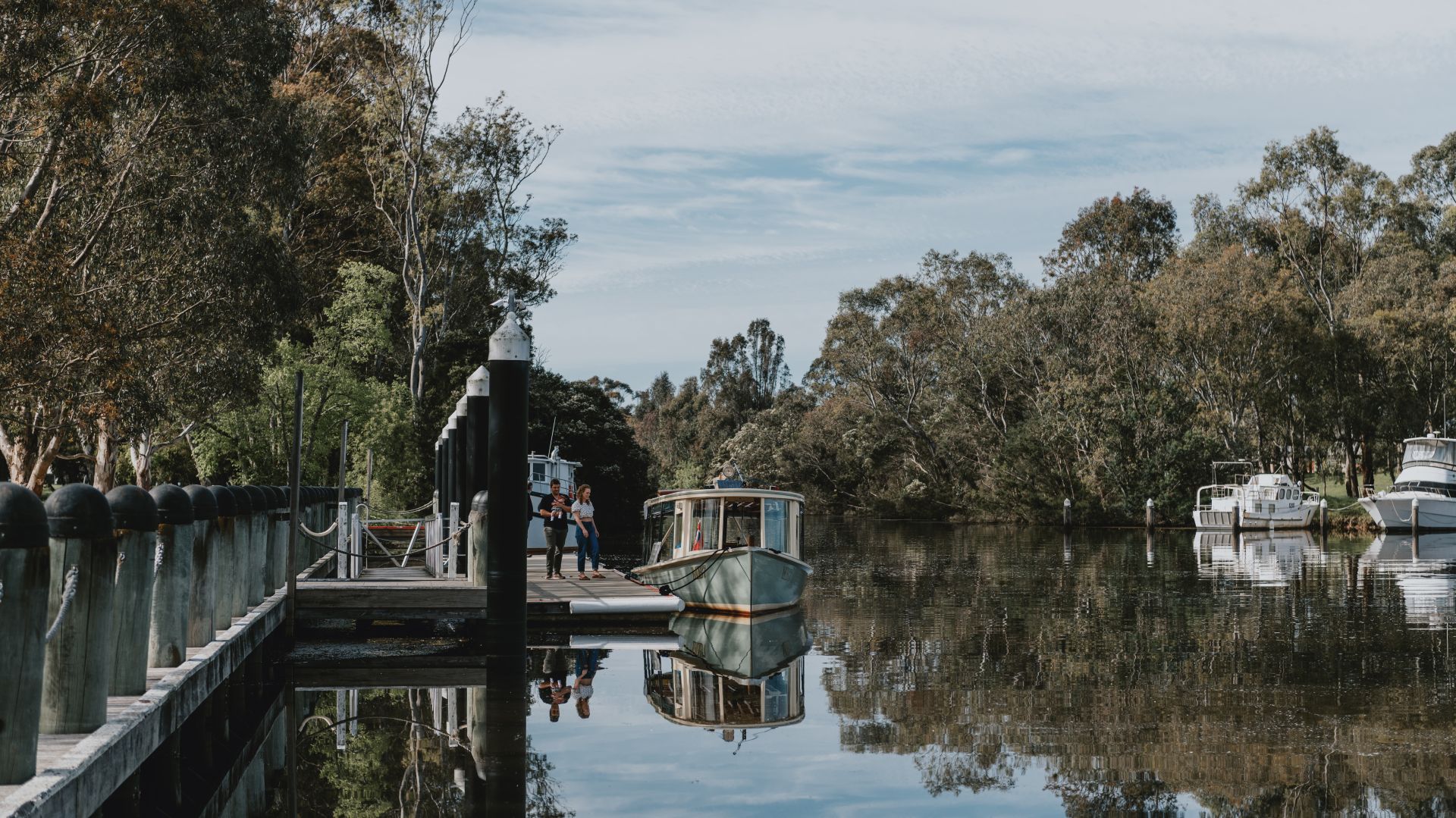

Journey through the rich history of this town, visiting various churches, stained glass windows and gothic architecture. Take a glimpse into the history of the township of Sale and how the town grew from its early beginnings.
Time: 55 min
Distance: 3.8km
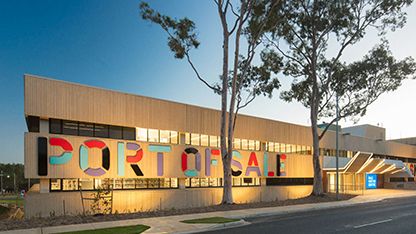
70 Foster St Sale
Originally built in the 1960's the Port of Sale - Wellington Centre has been redeveloped into a cultural precinct. In the Inter-war years, the site was occupied by the Sale District Co-operative Butter and Cool Store Ltd. which later became Gippsland Amalgamated Milk Products. The building now consists of the Gippsland Art Gallery, Sale Public Library, Sale Visitor Centre, Dock Espresso Bar and various meeting and open spaces.
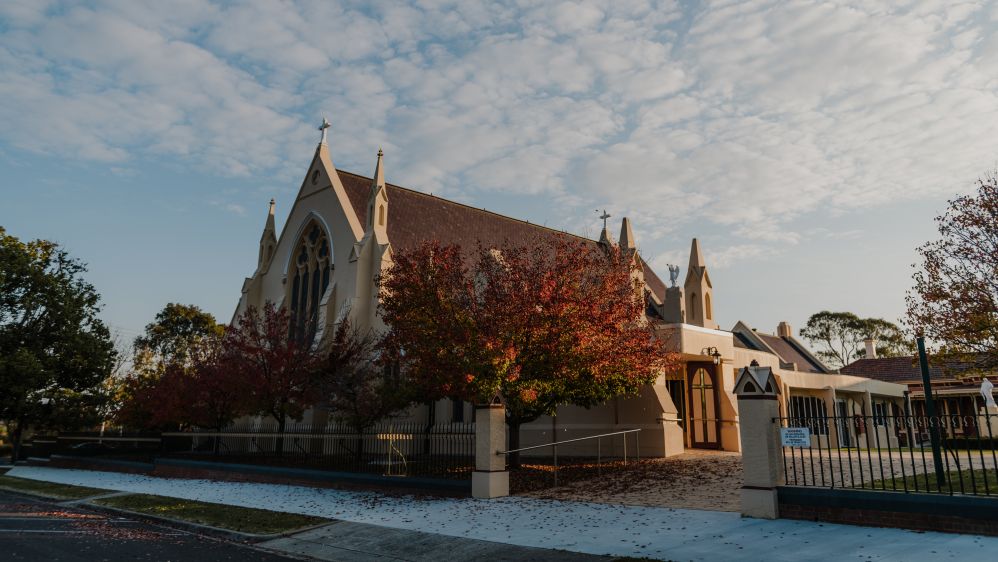
47-57 Foster St Sale
The present Cathedral was built on the site of an earlier chapel. Work commenced on the Cathedral in 1886 by local builder George Wynd, also built St Paul's Cathedral. St Mary's is features a stained-glass window, a memorial to Dr Floyd Peck, a surgeon who died in 1863.
29-41 Pearson St Sale
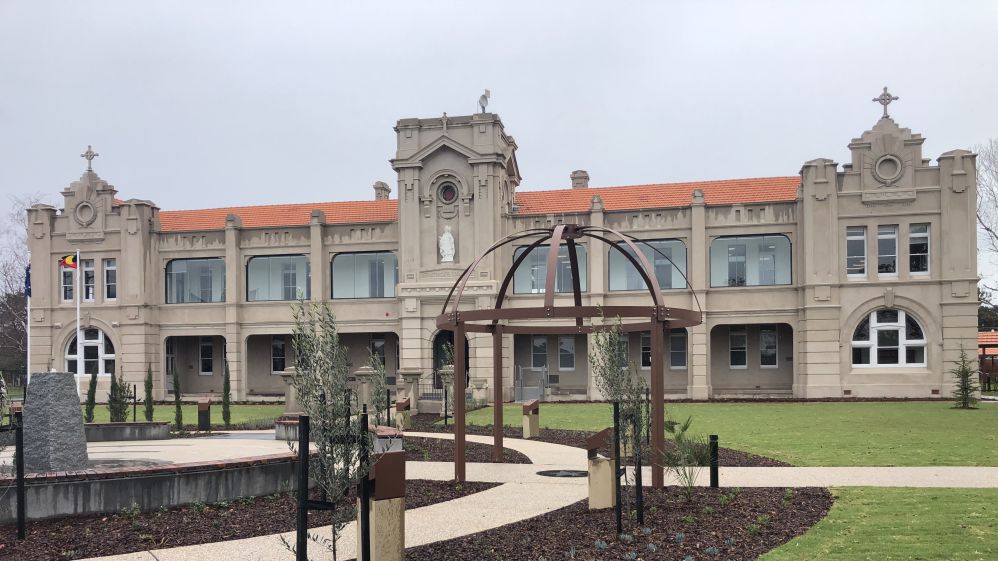
St Patrick's College was constructed in 1921 by the Marist Brothers. In 1977, St Patrick's amalgamated with the nearby Our Lady of Sion forming the Catholic College Sale. With recent redevelopments, the school has embraced all year levels on the one campus.
79-87 Foster St Sale
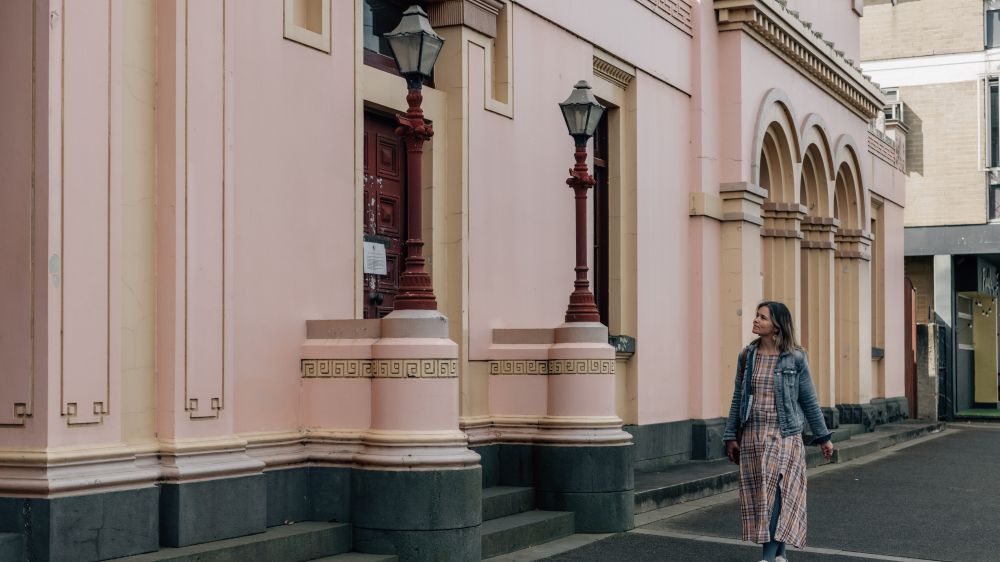
The Sale Magistrates' Court has roots in the early days of colonial Victoria, with a Court of Petty Sessions first appointed in 1846, which was reappointed when the township was named Sale in 1855. The current Sale Courthouse was built in 1863, with significant extensions added in 1874, 1889, and 1920 to accommodate its growing workload. Over time, other courts, including the County Court and Court of General Sessions, were also established in Sale, though many have since been relocated.
104-108 Raymond St Sale
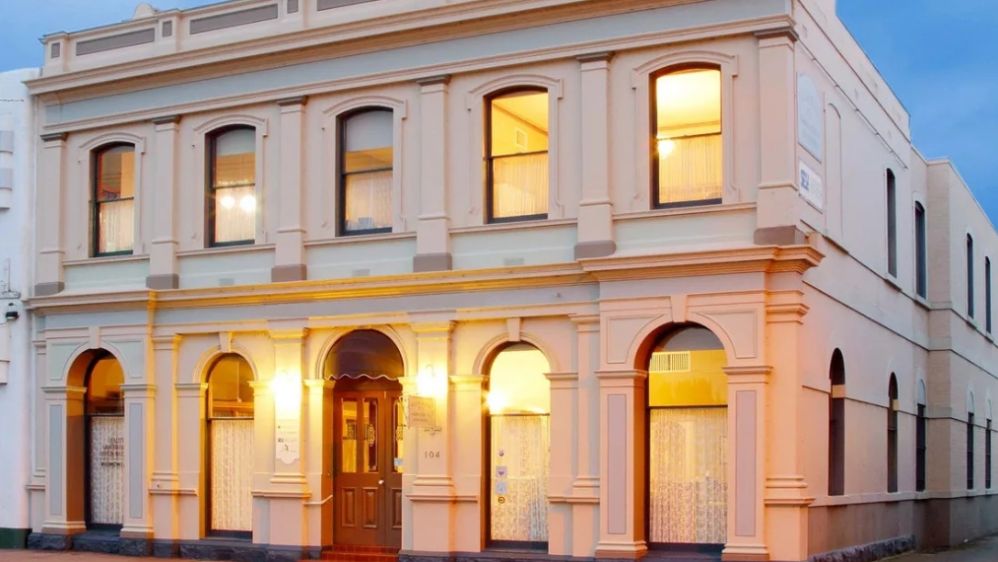
This imposing building was built by the Bank of Australasia in 1875. The scale of the building reflected the bank's confidence in Sale as a regional centre - supplying the gold fields and anticipating a stimulus to the town's economy with the completion of the railway line. After the Bank was moved, it became the law offices of Sullivan Braham.
118-124 Raymond St Sale
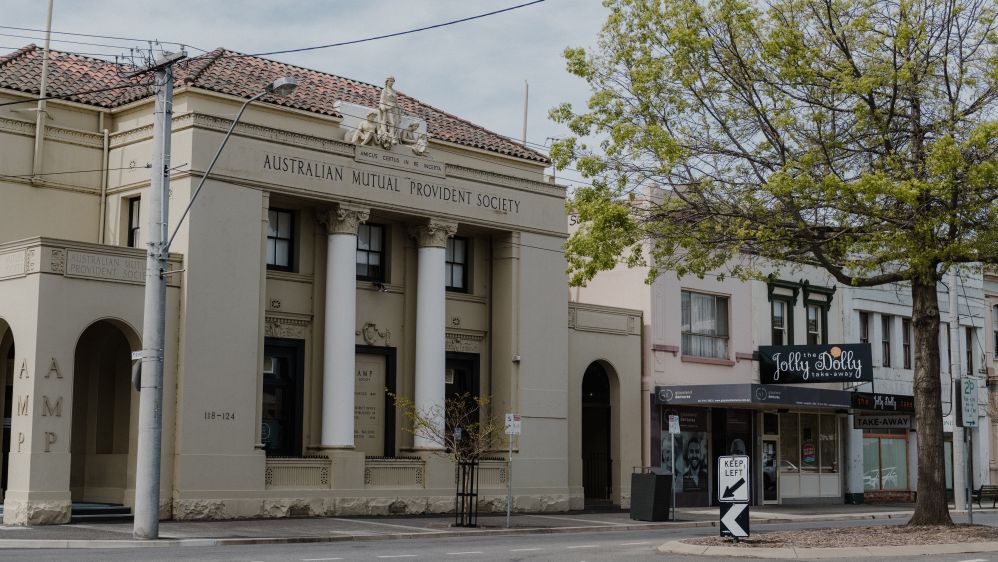
A District AMP office opened in Sale in 1914, and AMP built an office on the corner of Raymond and Macalister Streets in 1919. This building was erected in 1930, at a cost of 7,287 pounds, to the designs of Melbourne architectural firm Bates, Smart & McCutcheon. The builder was L. McBean of Caulfield. Upon completion, the building was described as a 'most notable addition to the architecture of the town'.
123-129 Raymond St Sale
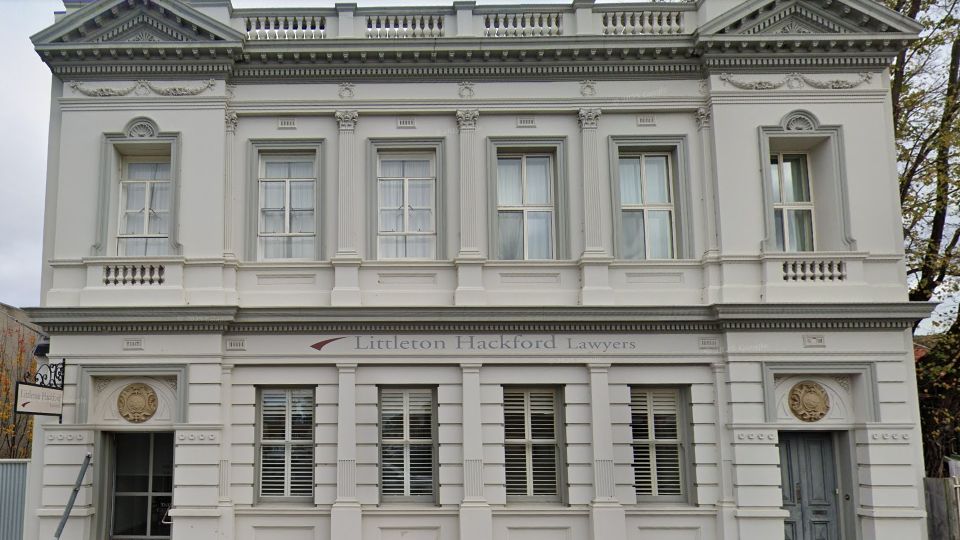
The former Commercial Bank is an imposing two storey Victorian building with grand facade featuring ornate rendered details such as pilasters with Corinthian capitals and decorated pediments with crenelated mouldings, and balustraded parapet. Originally constructed in 1889, the building was a further demonstration to the economic strength of Sale by the late 1880s.
199 Raymond St Sale
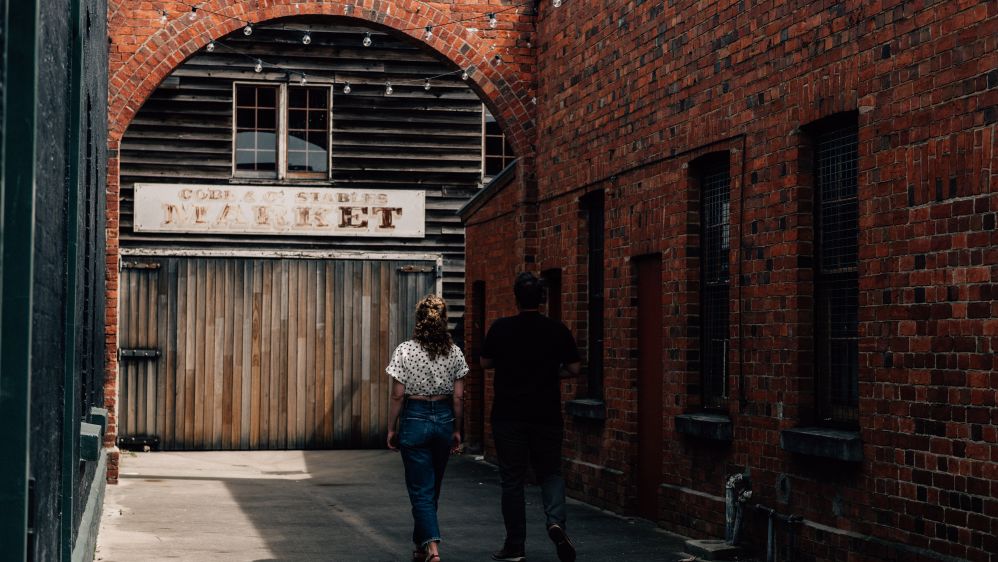
The stables were built by Paterson as a Horse Bazaar for Cobb & Co. in 1878. A coach service to Melbourne was started in 1859, Cobb & Co. taking over the Port Albert run in 1862 and the soon after Hewitt's coach service to Melbourne. Sale was the Gippsland headquarters of Cobb & Co. Their first stables were in Foster Street, with later stables being built in Bond Street.
Pedestrian Mall - Cunninghame St Sale
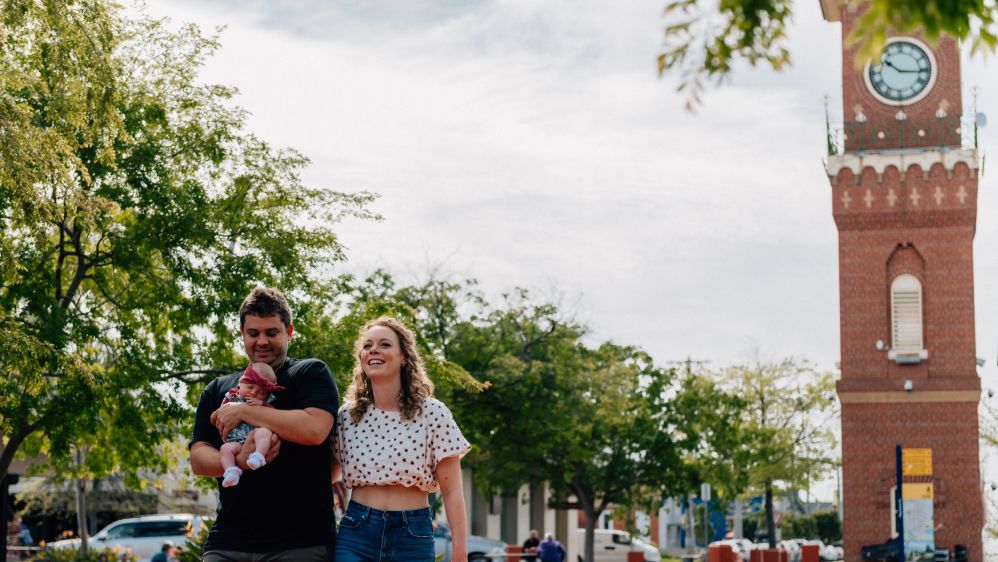
The current Sale Clocktower was built in 1988 as a replica of the original 1884 post office clocktower that was demolished in 1964. The 1988 community project incorporated the original clock mechanism and balustrades from the demolished tower into its new design. It now serves as a central landmark in the town and often a meeting point.
103 Cunninghame St Sale
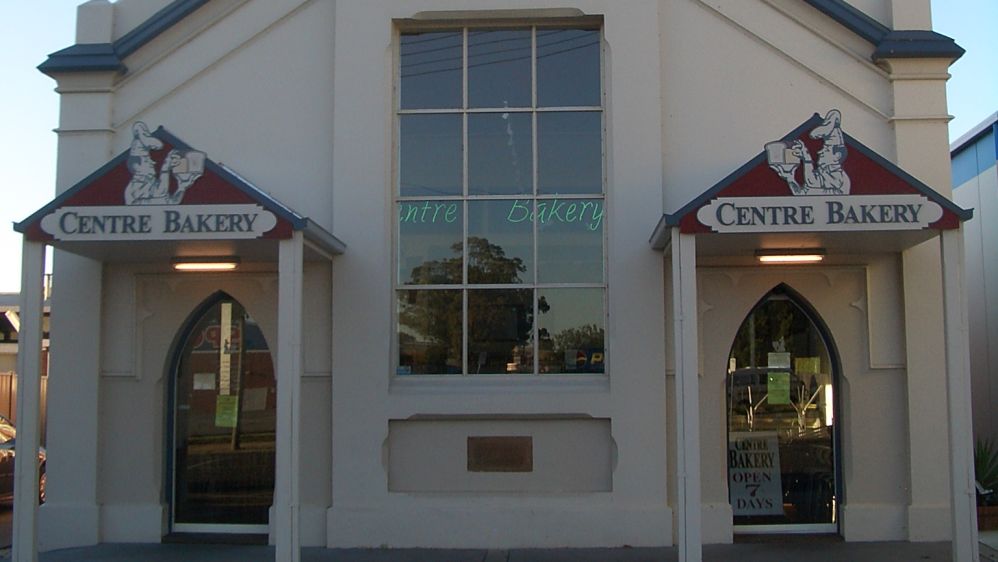
The former Sale Methodist Sunday School was built in two stages: the first part was a building constructed as a church in 1865, and a second part was built as the church in 1877. The complex was designed by architects Vahland and Getzschmann, and it features a 1877 polychrome brick church with a Gothic style, and a simpler, buttressed Sunday school at the rear. Today, it is now privately owned and has been converted into a modern bakery cafe.
149 Cunninghame St Sale
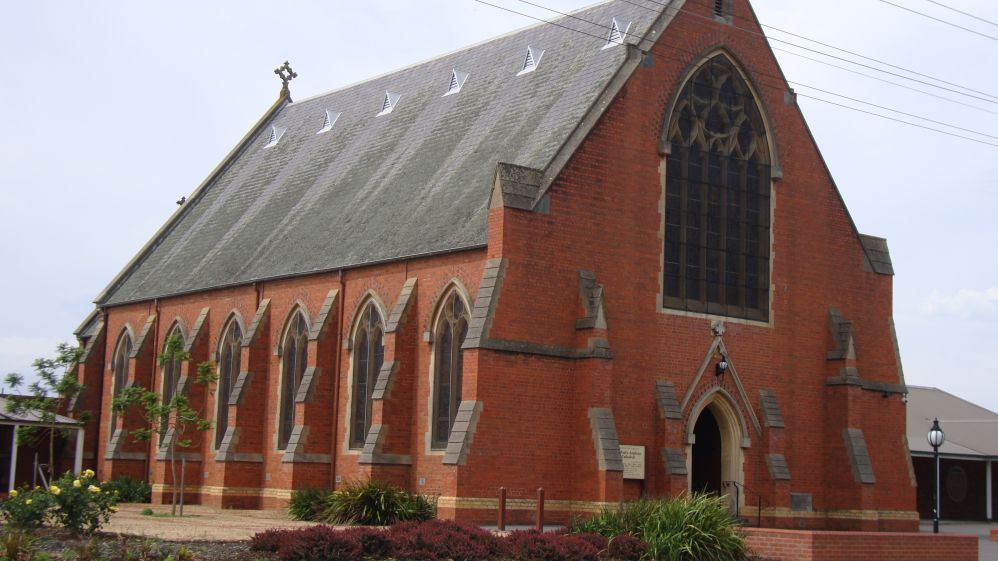
Plans were made to construct a new church on this site in 1882, and the Raymond Street church was used as a parish hall until the Divinity Hostel was built in its place. The architect Nathaniel Billing was again commissioned to design the building. Billing is widely associated with a revival in polychromatic Gothic designs in his church architecture at this time, demonstrating the influence of John Ruskin. George Wynd is presumed to be the builder and is mentioned in the 'Gippsland Times' report of December 1883 in connection with the laying of the foundation stone. However, the Argus of November 6, 1886, lists M. Wain as the contractor.
Cnr Marley & Cunninghame St Sale
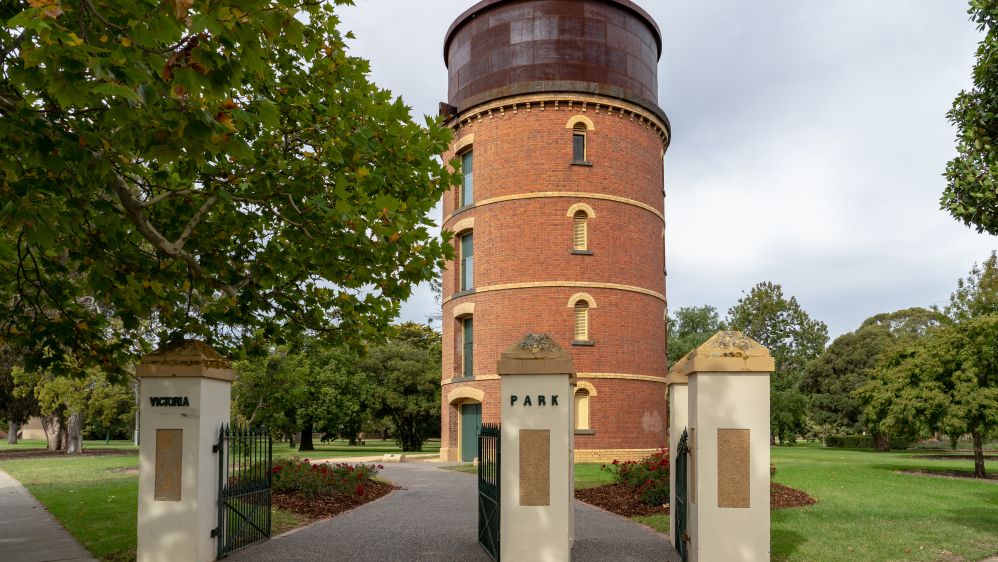
This site was originally gazetted as a market reserve in the 1857 survey of Sale, and this use was confirmed by gazettal's of 1876 and 1887. In 1882, the eastern five acres was excised to form a school site, and the current school building was erected at this time. In 1887 a one-acre site at the corner of Cunninghame Street and Marley Street was gazetted as a site for 'Tank & Public Baths' and the present large water tower was constructed at this time. By 1910, the Sale Bowling Club had been granted permissive occupancy of a one-acre site fronting Marley Street, and the present scout hall was presumably once the bowling clubhouse. In 1913, to celebrate the jubilee of Sale, a bandstand was erected in Victoria Park (no longer answering to the name Market Square). A grant of £749 from the government in 1919 permitted returned soldiers to work in Sale and £500 was spent on Victoria Park.
123-135 Macalister St Sale
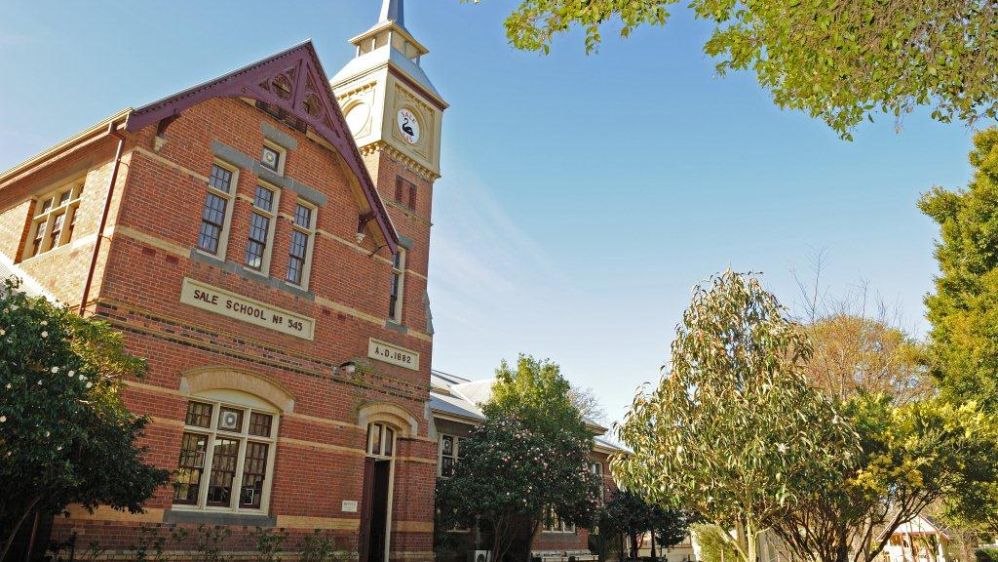
Sale State School was built in 1882-83 to replace the Common School on Raymond Street, part of which remains today. This site was originally part of the Market Reserve and was gazetted for school purposes in 1882. The location can be interpreted as a reflection of the spread of population to the east of the town centre. This building, designed by H.R. Bastow of the Public Works Department was built by Thomas Corley. It demonstrated Venetian Gothic architectural influences in the polychrome wall pattern and pointed arch windows.
99 Macalister St Sale
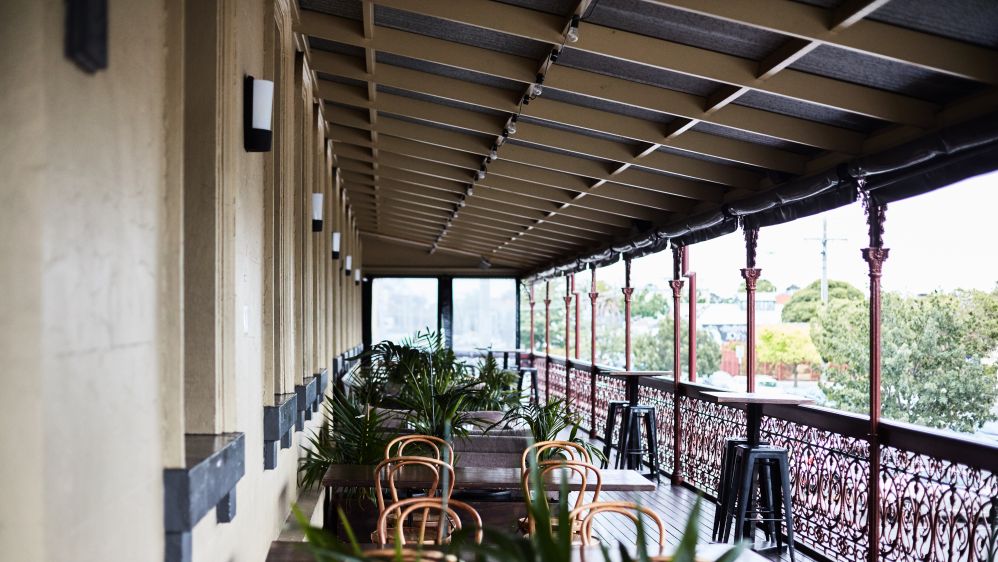
In August 1865, Charles Boykett of Emerald Hill placed an advertisement in the Argus calling for tenders for the building of a 'large hotel at Sale' for local landowner, John Cobain. The first publican was James W. Alister. Alterations to the building have occurred over the years. The first major identifiable change was the addition of the verandah, designed by Thomas Guthridge, was added in 1878 at a cost of 2000 pounds. Hutchinson of City Foundry supplied the iron. The verandah had to be rebuilt in 1906 after an unfortunate accident involving a runaway horse caused the collapse of the whole verandah. Today, the Criterion Hotel has been further redeveloped into a boutique bar, restaurant and accommodation venue.
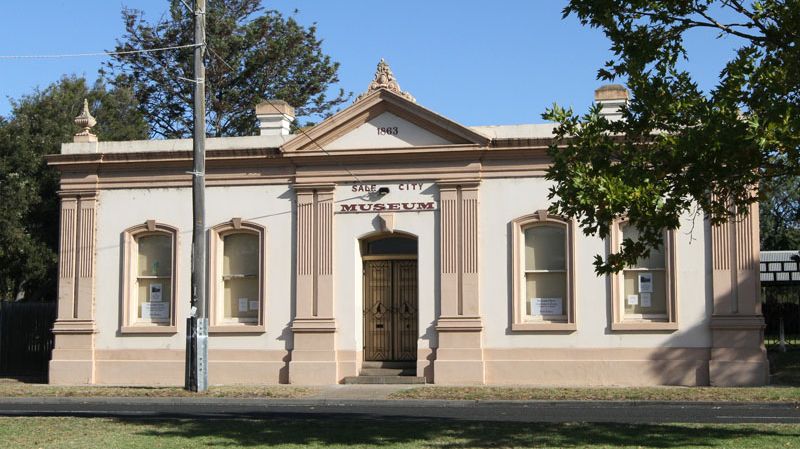
130 Foster St Sale
This is believed to be the oldest municipal building in Gippsland; the original section of the building housed the first council chambers built in 1864 when the Borough of Sale was established. Council vacated this property in 1960, and it was later established as the Sale Historical Museum, with many original items from the Borough of Sale remaining in place.
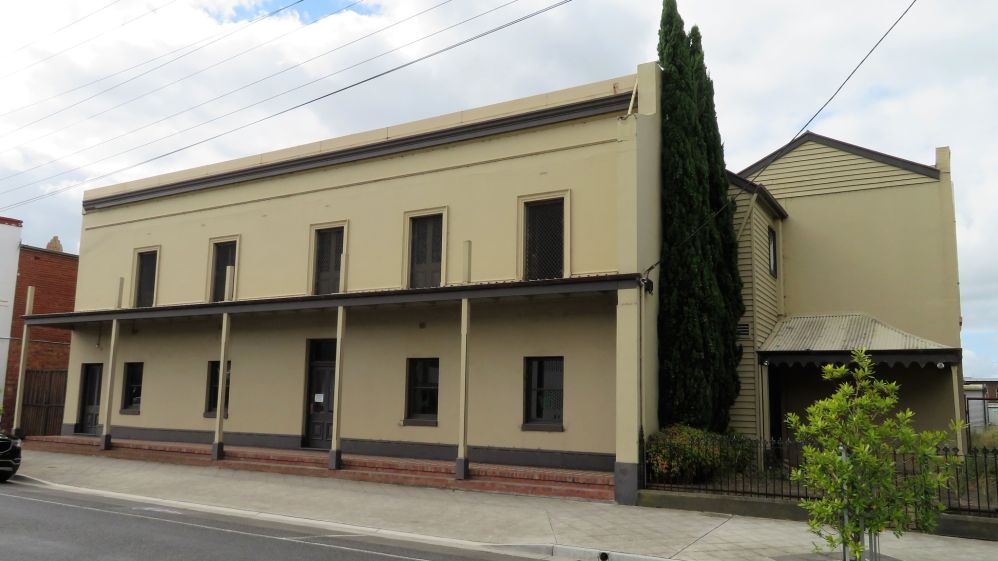
101-105 Foster St Sale
Built in 1858 by Richard Bennison, the Club Hotel was a hub for squatters. A visit by the Prince of Wales was commemorated by a plaque within the hotel. The Colonial Club Hotel was seriously damaged by fire in the late 1900s, and then later restored in the 1980s.